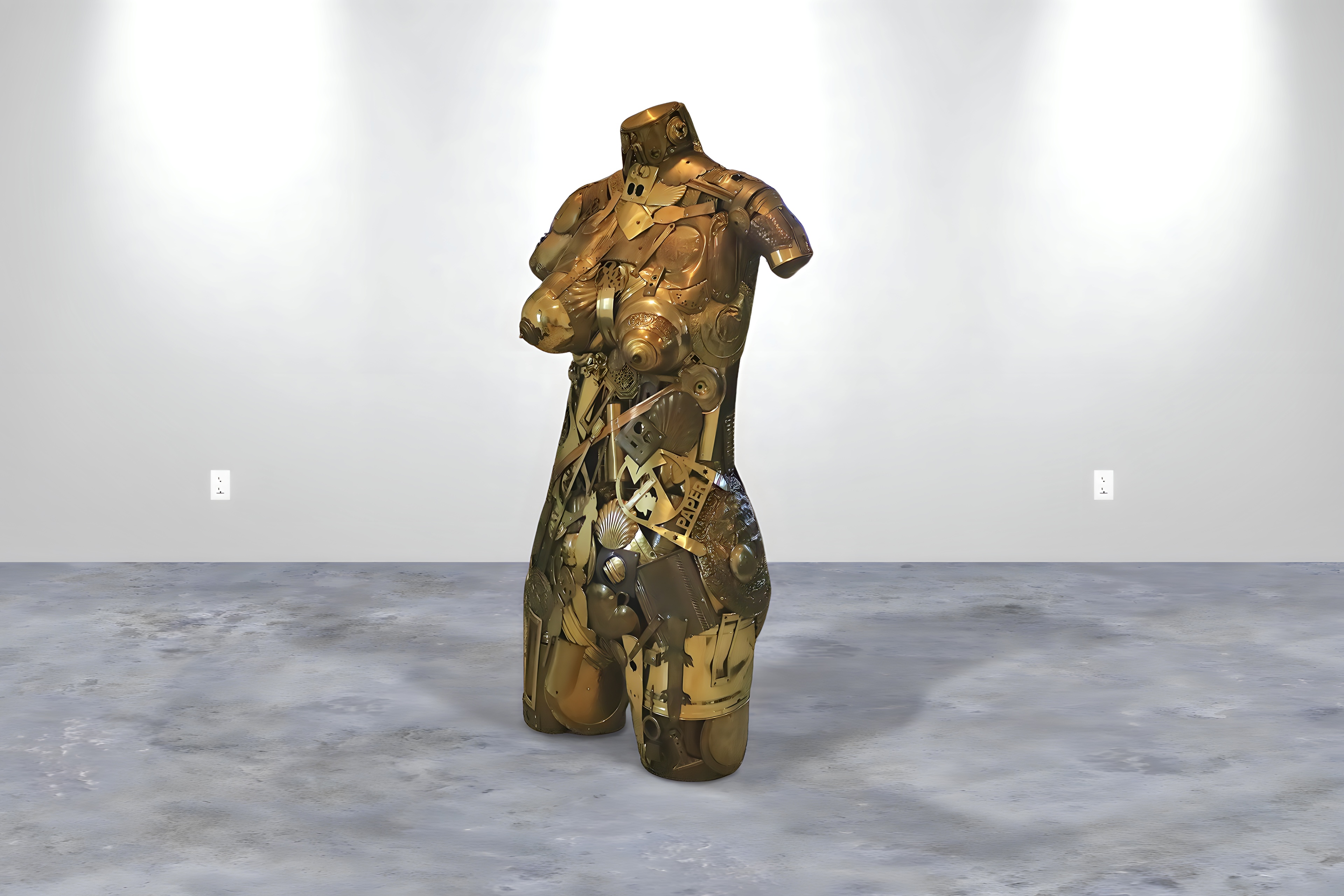
Collecting Found-Object Sculpture: A Buyer's Guide
Yes — found-object sculpture by an established artist is genuinely collectible, and Leo Sewell is about as established as the medium gets: his assemblages are held in over forty museums and in private collections worldwide. If you're considering your first piece, the two things to understand are that each work is unique (assembled, never cast) and built to last (fastened with real hardware). Start with the available work, or commission something to your own subject.
TL;DR
- Leo Sewell's work sits in 40+ museum collections and worldwide private collections — real, checkable provenance.
- Corporate collectors have included NBC and Nike.
- Every piece is one-of-a-kind and structurally fastened; care is simple but the works deserve thoughtful handling.
- Buy from the recent work page or commission a piece on the commissions page.
Is Leo Sewell's work worth collecting?
For a collector, the first question is usually provenance, and here the answer is unusually strong. Leo Sewell's assemblages are held in over forty museums and in private collections worldwide, and his corporate collectors have included NBC and Nike. That kind of institutional and corporate footprint is exactly what gives a living artist's market its floor — the work is already validated well beyond a single gallery.
It also helps that the work is instantly legible and hard to confuse with anyone else's. A wall of contemporary art can blur together; a Sewell animal, read up close, resolves into hundreds of recognizable objects. That distinctiveness is part of what makes a piece rewarding to live with and to own.
There's a practical collecting angle to that legibility, too: work with a strong, recognizable signature tends to hold interest and identity over time. You always know what you have, and so does everyone who sees it. For a first piece, that clarity is reassuring — you're not betting on an obscure name, but acquiring a distinctive example of an artist with a long, documented track record.
How do you buy a piece?
There are two routes:
- Available work. Browse what's currently on offer on the recent work page and enquire about a specific sculpture.
- Commission. If you want a particular subject, scale, or a piece that incorporates your own objects, the commissions page walks through the process.
How do you care for and display a found-object sculpture?
The good news: these are robust objects. They're built with objects selected in part for their durability and patina, and assembled with nails, bolts, and screws rather than fragile adhesives, so a well-kept piece is stable for the long term. A few sensible habits:
- Site it indoors unless the specific piece was made for outdoor display.
- Dust gently — a soft brush or dry cloth; avoid solvents and sprays that could react with mixed metal, plastic, and painted surfaces.
- Handle by the base or core, never by projecting objects, and support the full weight when moving it.
- Give it light and distance. The work rewards close inspection, so leave room to walk up to it.
Is found-object sculpture a good investment?
Honest answer: buy what you love first, and treat appreciation as a bonus. An artist with 40+ museum collections and decades of documented sales has a healthier long-term outlook than a speculative name, but art is not a guaranteed asset, and specific resale figures vary by piece, size, and venue.
What you can count on is scarcity: every piece is unique and the artist's lifetime output, while large, is finite. That combination — real institutional provenance plus genuine one-of-a-kind objects — is the sound basis for collecting here.
What should a first-time buyer look for?
If this is your first found-object piece, a few practical checks will steer you well:
- Read it up close. The pleasure of this work is the double-take — a coherent animal or figure from across the room that dissolves into hundreds of recognizable objects up close. If a piece rewards close looking, it's doing the thing well.
- Consider the object story. Some sculptures carry a wittier or richer vocabulary of parts than others. Notice what's in the surface; the best pieces feel composed, not merely filled.
- Think about scale and site. Be honest about where it will live and how much room it has to breathe. These works want a little distance and good light.
- Ask about documentation. For any collectible artwork, provenance and paperwork matter to future value.
- Buy the one you can't stop thinking about. With work this distinctive, the piece that stays in your head after you leave the room is usually the right one to live with.
None of these require expertise — just attention. And because every sculpture is unique, trusting your own eye is not only allowed here, it's the point.
Where to start
If you're ready, the recent work page is the place to find an available piece, and the commissions page is the place to begin a custom one. Either way, buy the piece that stops you in the room — with this work, that instinct is usually right.